Sleep, travel, and comfort
Travel Sleep Support: What to Look for in a Compact Cushion
A useful travel cushion does more than fit into a bag. Its shape, fill, and cover influence how it supports your head, how easily it packs, and whether it feels pleasant after hours on a train, plane, or unfamiliar bed. Here is how to assess the details before you go.
Travel changes the small conditions that usually make rest possible. A familiar mattress gives way to a seat that barely reclines; a quiet bedroom becomes a cabin of shifting light and sound. In those settings, a compact cushion can offer a little continuity. It cannot promise sleep, and it cannot turn every seat into a bed, but the right shape and level of support may make resting more comfortable.
The word “travel pillow” covers a broad range of objects: U-shaped neck cushions, small rectangular pillows, inflatable supports, and compact cushions meant for a hotel stay or a long ride. They are not interchangeable. A cushion that steadies the head while sitting may be awkward for sleeping on a flat surface. One that feels soft in a shop may take up too much room in a carry-on. Choosing well begins with the journey, not the label.
Think of a travel cushion as a small piece of sleep equipment. Its practical value depends on how it fits your body, what kind of support it offers, how it travels, and how you will care for it. Those considerations matter more than novelty features or claims that it will guarantee rest.
Start with the kind of rest you expect
Before comparing materials, picture the situation in which the cushion will be used. A passenger hoping to rest upright in a seat needs a different form of support from someone packing a small pillow for a night in a hostel. The first task is to identify where your head, neck, or shoulders are likely to need help.
- For upright travel: Consider whether the design helps limit the head’s tendency to tip forward or sideways. Neck cushions vary in height, firmness, and the way they close or sit around the neck. A good fit should feel secure without pressing uncomfortably against the jaw or throat.
- For a reclining seat: Check how the cushion works with the seat’s headrest and your usual resting posture. A bulky cushion may push the head forward; a low-profile design may not provide enough contact to feel useful.
- For a hotel or guest bed: A small rectangular cushion may be more versatile than a neck ring. It can provide a familiar surface for the head, or support an arm or shoulder, but its dimensions and loft should suit the way you sleep.
- For changing situations: If you expect to use the same cushion on a plane, in a car, and at a destination, look for a shape that can adapt without becoming cumbersome.
Comfort is personal, and the body’s position matters. A cushion should help you settle rather than force your neck into a fixed angle. If you have persistent pain, numbness, or a medical condition affecting sleep or posture, seek advice from a qualified health professional instead of treating a travel accessory as a remedy.
Size is more than a measurement
Compactness is not simply a matter of choosing the smallest cushion. A very small cushion may be easy to carry but too narrow to support the area you want to rest. A larger one may feel comfortable at home yet become an awkward, space-consuming item on a crowded journey. The useful question is not “How small is it?” but “How much support does it provide for the space it occupies?”
Compare the cushion’s packed dimensions with its usable dimensions. Some designs compress, fold, or roll; others keep their shape and need a dedicated pocket or strap. Find out whether the listed measurements refer to the cushion alone or include an insert, case, or storage bag. If a product description gives only its expanded size, look for the packed size before deciding whether it will fit in your personal item.
Weight matters on journeys where every item must be carried between stations, terminals, or accommodation. A soft cushion that weighs little may be easier to bring along consistently than a more elaborate model that is left at home because it is inconvenient. But lightness alone does not determine usefulness. Thinness, material resilience, and the ability to keep its shape all affect the support you feel.
Consider the rest of your kit, too. A cushion that clips onto a bag can be convenient, but an exposed item may collect dust or brush against other luggage. A removable pouch or case can make storage cleaner. If you are packing tightly, check whether the cushion can be compressed without damaging its fill, and whether it returns to its usual shape afterward.
Support begins with shape and loft
Loft describes a cushion’s height when it is supporting the body. In a bed pillow, loft can influence how the head and neck sit in relation to the shoulders. In a compact travel cushion, the same basic principle applies, but posture and seat design add complications. A high cushion may be helpful for one person and push another’s head forward. A low one may feel unobtrusive but offer too little contact.
Shape determines where that loft sits. A U-shaped cushion surrounds part of the neck, while a rectangular travel pillow offers a more familiar, localized surface. Some cushions use contoured sides or a closure to stay in place. Others are designed to be repositioned as the traveler changes posture. The best choice depends on what feels stable when you are seated and how much movement you want the cushion to permit.
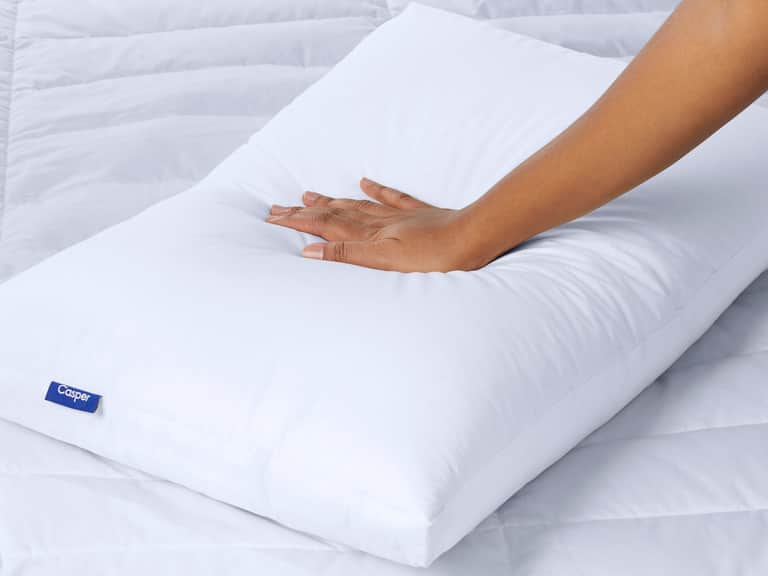
Firmness and softness are also distinct. A cushion can feel plush at the surface yet have a firmer inner core, or feel dense throughout. Softness may make contact feel welcoming, but if the fill compresses quickly, it may provide little lasting support. A firmer cushion can hold its form but may feel too rigid against the face or neck. When possible, test the cushion in a seated position rather than judging it by pressing it with a hand.
If you already know the position in which you tend to rest, use that as a practical guide. A traveler whose head falls sideways may want a design that offers lateral support. Someone who prefers to lean against a window may need a cushion that works between the head and the surface. No single shape can accommodate every seat, body, or preference, so flexibility can be an advantage—but only if the cushion remains easy to adjust.
What different fills can feel like
Fill affects weight, resilience, airflow, and how a cushion responds to pressure. Names on a label do not tell the whole story: construction, density, and the amount of fill matter as much as the material itself. Still, understanding the broad differences can narrow the search.
- Fiberfill: Often lightweight and familiar in feel, fiberfill may compress for packing and regain some loft afterward. Its performance depends on the fiber and construction, and some designs can flatten or bunch with repeated use.
- Foam: Foam can offer a more structured surface and may retain its shape during use. Depending on its type and density, it can feel springy or slow to respond. It may also be bulkier or warmer than a loosely filled cushion.
- Down and feather blends: These can create a soft, yielding feel and can be reshaped by hand. Their loft may shift, so users may need to fluff or reposition the cushion. Check care instructions and material disclosures carefully.
- Natural plant or animal fibers: Wool, kapok, and other natural fills have distinctive textures and weights. Their behavior varies, and “natural” does not automatically mean lighter, cooler, easier to clean, or suitable for every traveler.
- Inflatable support: An inflatable design can pack very small and allows the user to adjust firmness by changing the air volume. It may feel different from a filled cushion, and the valve and seams become important parts of its durability.
A cushion’s cover can change the sensation of the fill, so evaluate the complete item rather than the inner material in isolation. A smooth, tightly woven shell may feel different against the cheek from a soft knit cover. Construction details, including internal compartments or stitching, can affect how evenly the fill stays distributed.
Silk travel cushions: lightness, layers, and expectations
Silk travel styles appeal to people seeking a smooth, lightweight surface in a compact format. But “silk travel cushion” can refer to several different constructions. Silk may form the outer shell, contribute to the fill, or appear as one component in a blended filling. A silk-like cover is not the same thing as a cushion filled entirely with silk, and product names alone may not make that distinction clear.
Read the material description closely. Look for the composition of the outer fabric, inner casing, and filling. A cushion might have a silk exterior, a cotton inner cover, and a blended fill designed to retain loft. In other cases, the surface fabric may be silk while the core uses another fiber. These layers influence how the cushion feels, how it holds its shape, and what care it requires.
Silk is often associated with a smooth hand and a light feel, but it should not be treated as a promise of cooling, allergy protection, or better sleep. The experience depends on the weave, weight, fill, room temperature, and the person using it. Anyone with a material sensitivity should review the full construction and, if necessary, consult a knowledgeable clinician.
Care is especially important. Some silk items require gentle washing or specialist cleaning, while a cushion’s inner fill may have stricter limits than its removable cover. If the cover can be removed, confirm whether it is washable and how it should be dried. A cushion that feels appealing but cannot be cleaned in a way that suits your travel routine may not be a practical companion.
The cover is part of the travel design
A cover is the surface that meets skin, hair, clothing, and the outside world. On a long trip, it may be exposed to cabin air, station benches, luggage, and frequent handling. A removable, washable cover can make maintenance easier, but the care label should specify what washing actually means: machine or hand washing, water temperature, drying method, and any restrictions.
Texture is a matter of preference. Some people favor a smooth surface that does not tug at skin or hair; others prefer a soft knit that feels familiar. A breathable fabric may feel more comfortable in a warm environment, but airflow through a cover does not guarantee that the entire cushion will stay cool. The fill, seat temperature, clothing, and surrounding air all play a part.
Pay attention to closures, seams, and fastenings. A zipper should not sit where it presses against the face or neck. A strap or snap can help keep a cushion attached to luggage, though it should not snag on clothing or obstruct the cushion’s use. On a small item, these details can make the difference between a design that travels neatly and one that becomes a nuisance.
Care on the road and at home
Cleaning instructions are not interchangeable across pillow materials. A removable cover may be washable while the cushion core is not. Foam, latex, wool, down, silk, and blended fills can all require different methods. Before travel, check the manufacturer’s care guidance and avoid assuming that a cushion can go into a washing machine just because its cover can.
For everyday protection, keep the cushion in a clean bag when it is not in use. If it becomes damp, allow it to dry fully according to its care instructions before storing it. Trapping moisture in a packed cushion can leave it unpleasant to use and may affect some materials. For a washable cover, follow the label’s directions and make sure it is completely dry before putting it back on.
After a journey, air the cushion if its materials permit. Give it time to recover from compression rather than leaving it wedged under heavy luggage. If the fill has shifted, redistribute it gently as directed. Regular inspection can reveal split seams, worn closures, or a cover that no longer protects the inner cushion well.
Hygiene matters most when a cushion is shared, used frequently, or carried between many environments. A personal cushion with a washable case may be easier to maintain than one whose exposed surface cannot be cleaned. A separate pillowcase can provide another protective layer if it fits securely and does not interfere with the cushion’s shape.
A practical comparison checklist
Product descriptions can be dense with fabric names and feature claims. A short checklist keeps the decision grounded in everyday use:
- Purpose: Is it intended for upright rest, a hotel bed, or several types of travel?
- Fit: Does the shape match the way you tend to lean or settle?
- Dimensions: What are the expanded and packed measurements?
- Weight: Will you be comfortable carrying it between stops?
- Fill: What materials are used, and how do they respond to pressure?
- Cover: Is it removable, and can it be cleaned as you need?
- Included components: Is an insert, pouch, or separate case part of the package?
- Care: Are the instructions realistic for your home and travel routine?
- Durability: Are the seams, closure, and material construction suited to repeated packing?
- Claims: Can performance statements be checked against specific product details rather than broad promises?
If testing is possible, try the cushion in a seat and hold the resting position for several minutes. Notice whether your head feels supported without being pushed forward, whether the cover is comfortable against your skin, and whether you can reposition the cushion easily. If you cannot test it in person, look for clear dimensions, detailed material descriptions, and a return policy you understand.
Avoid common travel-pillow mismatches
One frequent mistake is choosing a cushion solely because it compresses into a small pouch. Packability matters, but a cushion that is uncomfortable in use may add weight without adding support. Another is selecting the plushest option by touch. Surface softness can be inviting, yet the cushion may collapse under the weight of the head.
It is also easy to confuse a neck support with a sleeping pillow. A U-shaped design may work well for sitting upright but feel strange when used on a bed. Conversely, a rectangular cushion may fit a hotel pillowcase but wander around when used in an upright seat. Consider the main task first, then decide whether a versatile shape is genuinely useful.
Finally, do not assume that special materials or technology can overcome a poor fit. A cooling surface cannot compensate for an uncomfortable height; a luxurious fabric cannot make a cushion easy to clean if its care instructions are restrictive. Features matter when they serve the journey you are actually taking.
Choosing for the journey ahead
Travel sleep support is a study in trade-offs. A cushion must balance comfort with portability, a pleasant cover with realistic care, and enough structure with enough softness to suit the user. The most compact option may not be the most supportive; the plushest may not be the most stable. The right choice is the one you can carry, position, and maintain without fuss.
Begin with the journey: how long you will be seated, whether you expect to sleep upright, and how much room your luggage allows. Then compare dimensions, fill, shape, and cover as parts of one system. A silk travel cushion may suit someone who values a smooth surface and lightweight design, provided its layers and care requirements match their needs. Another traveler may prefer a different material or a more structured shape.
There is no universal cushion for every body and every itinerary. A thoughtful choice does not promise a perfect night in unfamiliar surroundings. It offers something more modest and more useful: a portable surface that fits the journey, supports the way you rest, and is simple enough to bring along again.
Frequently asked questions
What is the most important feature in a travel pillow?
Fit is a good place to start. A cushion should suit your intended position and provide support without forcing your head or neck into an uncomfortable angle. Portability and care matter too, but neither makes up for a poor fit.
Are silk travel cushions easy to care for?
Care depends on the specific construction. Check instructions for the cover and the inner cushion separately. Some covers may be washable, while the fill may require spot cleaning or professional care. Follow the product’s label rather than general assumptions about silk.
Should a compact cushion be inflatable or filled?
Inflatable designs can pack into little space and allow firmness adjustments. Filled cushions may feel more familiar and require less setup, but can take up more room. The best option depends on how much you value pack size, feel, and ease of use.
Can a travel cushion prevent neck pain?
A cushion may make a resting position feel more comfortable, but it cannot be relied upon to prevent or treat pain. Persistent symptoms, tingling, or restricted movement warrant guidance from a qualified health professional.